


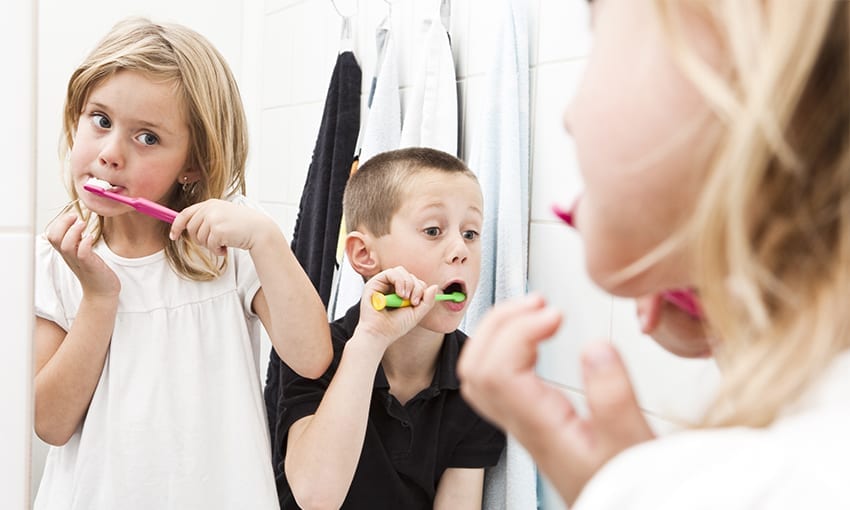
Ever find yourself running around after your children trying to get them to brush their teeth?
This is a common issue for parents.
Having to battle their independence and strength is a challenge to say the least. Being a parent can be a tiring job. Needing vs wanting to do the essentials is exhausting, knowing it can take patience and the child’s willingness to get them to do what you want.
So when it comes to brushing a child’s teeth, it can test our patience to no end. Hopefully, we can assist in preventing you from stressing and allowing brush time to be more fun.
We have met many parents who stress their concerns about not being able to brush their child’s teeth or that their child just won’t do it, full stop.
In this blog we hope to inform parents on:
- How to involve their children in a brushing routine
- How to actually gain access to clean their children’s teeth properly, and
- What age is recommended to visit the Dentist/Dental Hygienist
For babies, you should be using a damp washcloth to clean their gums daily by gently rubbing them. Once their first tooth erupts, begin brushing with a “soft” child-size toothbrush using just water. This can be easier if your baby is laying on your lap or on a bed. You can allow your baby to chew on the toothbrush to begin with and give a quick (gentle) brush to ensure all plaque has been removed.
The best thing to do is get children into a routine. Dental health will be an ongoing process throughout your child’s life, so by beginning brushing daily from when their first teeth appear, they come to think of it as a normal habit each day.
We understand life gets busy and you may forget to brush their teeth every day. The important thing to remember is plaque can take up to 9 days to mature and harden turning into calculus (also known as tartar). Once calculus has calcified it becomes difficult to remove by brushing alone and will need a dental professional to assist. So understanding this, missing a day here or there will not cause damage.
However, it is important to note that leaving plaque on the teeth or around the gum for a period of time can cause gum inflammation and bleeding. Once the source of infection (plaque) is removed the gums will heal. So missing a day here or there is fine but do try and stick to a routine.
So, ‘how do we get a toddler to brush their teeth?’ you ask.
One thing children need is the assistance from a parent until about the age of 12. Their dexterity and attention span has not fully developed, therefore they are unable to manoeuvre the toothbrush properly. With this we recommend that parents allow their child to brush his/her teeth first, possibly at the same time the parent is, to learn the technique and interest from their parent.
Make it fun by either: use of an electric toothbrush, making bubbles with toothpaste in their mouth, having music on in the background and allowing them to watch in the mirror (such as making bubbles).
Once the child has brushed his/her teeth, the parent needs to have a good brush ensuring all plaque has been removed. The best position for the parent is to have the child’s back against their stomach.
This allows you to both have a visual and keep a good hold of your child.
If your child is quite young and it is hard to access all teeth, you can use gauze to wipe the surfaces of their teeth.
The recommended age to visit the dental practice is either when the child’s first tooth appears, or no later than their first birthday. Even if it is just for a meet and greet, a ride in the dental chair and some advice regarding their hygiene maintenance. Make sure you inform your child that the dentist is a happy place and if you have anxiety about the dentist don’t let it be placed on them. More often than not, the children love having their teeth checked and counted and the experience makes them feel special.
Further information:
For more information about how to best care for your children’s teeth during their development stages (babies, toddlers, under 6 years, and over 6 years), please click here.
For further information about our children’s preventative care services, please click here.